
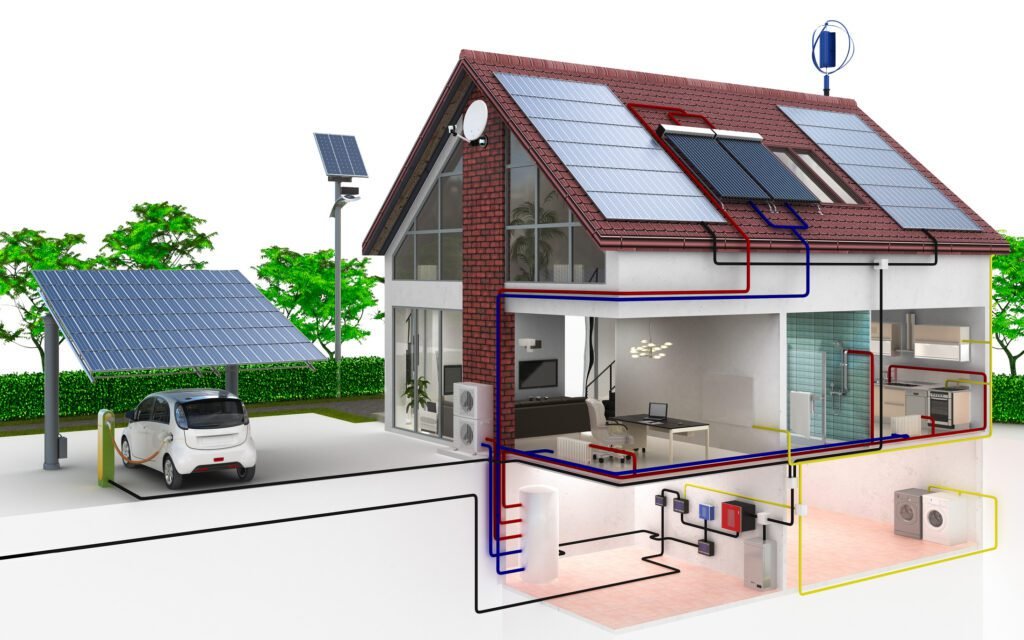
Combining solar panels, a battery, a heat pump and an EV charger works well because each technology covers a weakness of the others. Solar generation peaks at midday, while heating, hot water and car charging tend to peak in the morning and evening. A battery bridges that gap, letting stored solar energy power the home after dark. Without storage, much of the electricity a system produces, if not used immediately, is exported at a lower rate back to the Grid, but a battery and EV charger can absorb that surplus instead, so more of it is used directly and each kilowatt-hour avoids buying energy from the Grid at a higher price. This matters more as the heat pump and car add to household demand.
Correct insulation adds another layer. A well-insulated home can soak up solar energy as heat during the day and release it later, often more cheaply than adding battery capacity. On a time-of-use tariff, the battery and car can charge overnight at cheap rates while the heat pump runs on a schedule that suits the tariff. A bidirectional charger could even let the car supply the house or export power at peak times, provided the car and charger support it.
Taken together, these pieces lower bills, cut the carbon attached to heating and driving, and can keep the house warm. A single energy management system can coordinate all four, prioritising solar for the heat pump and car, charging the battery when generation is abundant, and avoiding Grid imports at expensive times. That makes the whole setup far simpler to live with day to day.