
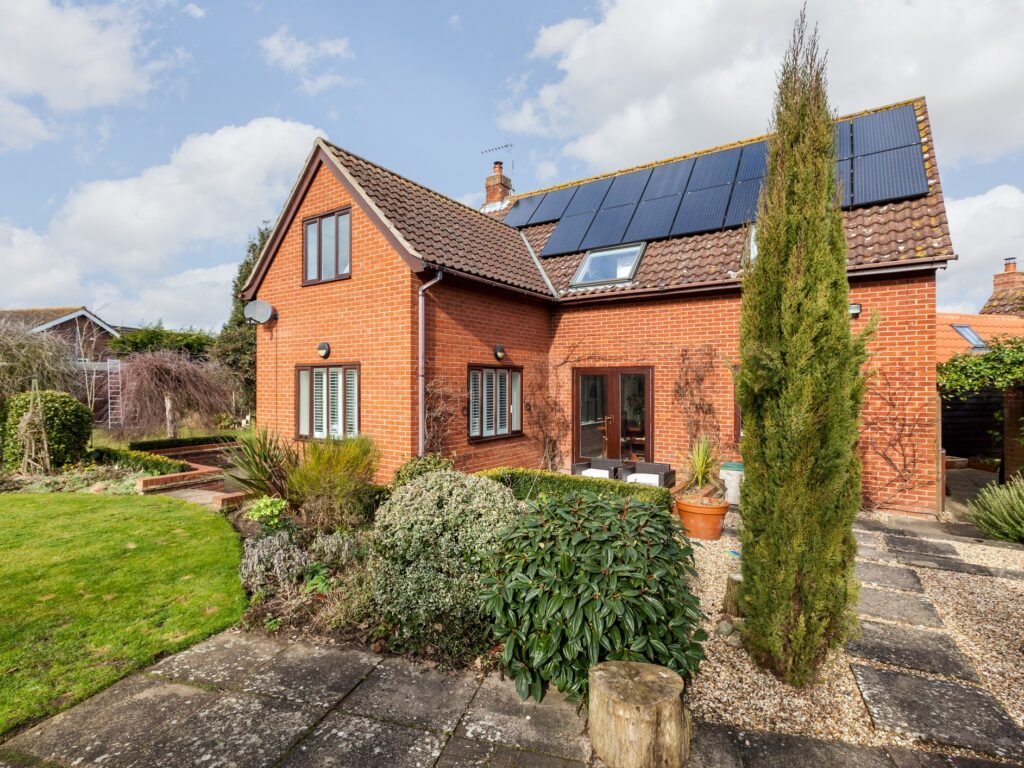
Solar panels offer financial, environmental, and practical benefits, though the size of each depends on your roof, location, and energy habits.
Lower electricity bills
Panels generate electricity from daylight, so you draw less from the grid. Using that power while it’s light, such as running appliances during the day, saves the most. Many households cut their bills substantially, and some use very little grid electricity on bright days, even when it’s overcast.
Income from exported electricity
Surplus power you don’t use can often be sent back to the grid. In the UK, suppliers offering the Smart Export Guarantee pay for exported electricity, though rates vary by supplier and change over time.
Protection against energy price rises
Once installed, your solar generation is effectively fixed-cost. Each unit you generate yourself is one you don’t have to buy at a fluctuating tariff, which gives some protection against future price increases.
Increased property value
Homes with solar panels often sell for more and can attract buyers who want lower running costs. The effect varies by area and by how the property’s panels are owned, so it’s worth checking with a local estate agent.
Lower carbon footprint
Solar power produces no emissions while operating. Over a typical 25 to 30 year lifespan, a domestic system can offset a significant amount of carbon compared with grid electricity, especially where the grid still relies on fossil fuels.
Low maintenance
Panels have no moving parts, and most manufacturers offer warranties of 25 years or more on output.
Energy independence
Generating your own power reduces reliance on external energy markets and supply disruptions. Adding a battery storage system can extend this by letting you use stored daytime power in the evening.
Potential incentives and grants
Government schemes, local grants, and VAT relief on installation have varied over time. Checking current availability is worthwhile, since these can significantly reduce upfront costs.
Summary
Solar panels can reduce bills, earn income from exported power, protect against price rises, cut emissions, and need little upkeep. Because they work from daylight rather than only direct sun, they generate useful power across much of the year in the UK. The best value comes from a suitable roof, a good installer, and a usage pattern that matches daylight hours.